

Enjoy Fall Color and Leave the Leaves!
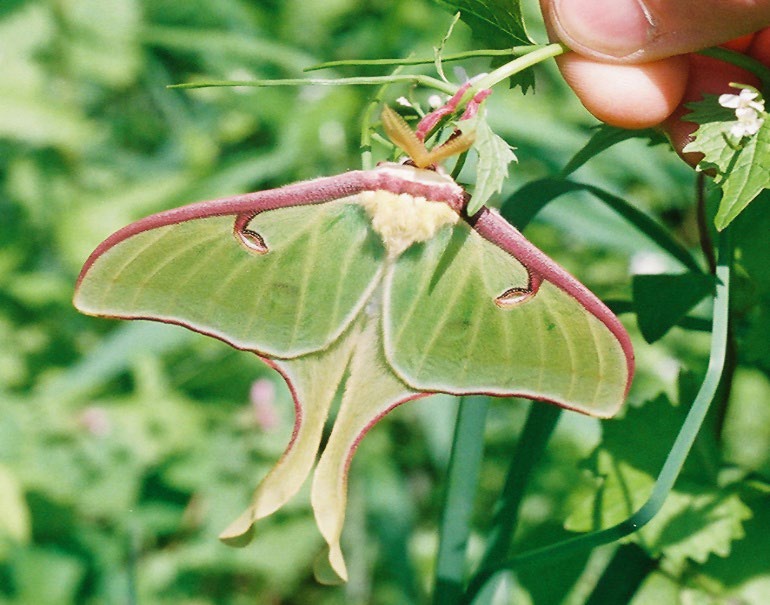 Actias luna, or the luna moth
Local trees are turning glorious colors. In our area, peak fall color usually arrives in mid-to-late October—just in time for Halloween. Some of our most notable trees for fall color include maples (turning shades of red and yellow), sweetgums (yellow/red/purple), tulip poplars (bright yellow), birches (yellow), sycamores (dull yellow) and dogwoods (red/orange/yellow)—the list goes on and on. Some years, even northern red oaks (and other oaks) put on a show with wonderful shades of deep red—in 2025 they were particularly impressive.
But why do leaves turn color in fall? These colors have been in the leaves all season long; the green that we see in leaves is due to chlorophyll which is what plants use to capture the energy of the sun. The shorter days, less intense sunlight, and cooler temperatures of autumn cause the chlorophyll in deciduous tree leaves to break down, removing the green ‘mask’ and allowing the underlying colors to suddenly appear.
By Thanksgiving, almost all of the leaves will have fallen—but notably not the leaves of oaks, beech, ironwoods and a few other species that have what are called ‘marcescent leaves’. These trees hold on to their leaves throughout most of the winter, making them easy to pick out in the landscape. It is thought that marcescence evolved to protect winter twigs from being browsed by ancient herbivores that used to roam North America such as giant sloths (and it seems to help a bit with modern white-tailed deer as well).
But even as leaves fall to the ground, their ecological job is not done. In recent years, most gardeners have become acutely aware of the importance of ‘leaving the leaves’. Not only do fallen leaves break down over time returning nutrients to the soil, provide natural mulch which retains soil moisture and slows erosion, and supplies critical habitat and shelter for overwintering wildlife including butterflies, salamanders and other creatures. Some of our most glorious native moths, such as luna moths and giant silk moths, overwinter in cocoons that they have spun in dead leaves which then drop to the ground where they hide (perfectly camouflaged) and bide their time until spring when they will emerge and fly again.
—Randi Eckel
From the October, 2026 edition.