
Early Freeze Harms Local Orchards, Including Nagy’s Peaches
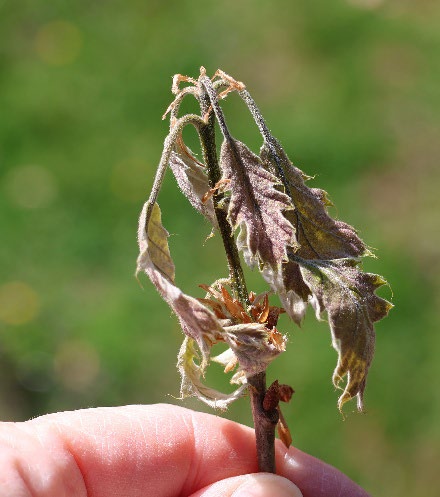 Northern
Red Oak (Quercus
rubra) leaves the day
after the freeze on
April 22.
Northern
Red Oak (Quercus
rubra) leaves the day
after the freeze on
April 22.
It seems like a long time ago, but back on April 21 of this year, Frenchtown experienced a record-breaking hard freeze (as low as 23°F) that has had some long-term consequences for farms, trees and wildlife in our area.
Many plants, including mature hardwood trees, had already leafed out and the new leaves simply froze in place. Oak trees, hackberries, and others had all or most of their young leaves completely frozen and killed. Even young acorns, hackberry “berries,” maple seeds, and many other tree and shrub fruits (critical for wildlife) were frozen and killed. Countless flowering trees, from apple, peach and cherry trees at local farms, to flowering dogwoods and redbuds in yards and woodlands, had their flowers or young fruits frozen and killed. Even blueberries and strawberry crops were hard hit.
Farmers across the state have said that they have never seen anything like it. Due to the devastating effects of the freeze, Gov. Sherrill applied for statewide disaster designation, which was approved by the USDA for all 21 counties in the state on June 10. This makes N.J. farmers eligible for low interest federal loans to help them recover.
Few fruit and specialty farms in our area escaped damage: Nagy’s Orchard, just south of town, has announced that they lost their entire peach and apple crops for the year. In the entire region, local peaches and apples, among other fruits, will be hard to come by this year.
What does this mean for the homeowner who doesn’t have a farm? Acorns and many other important sources of wildlife food will be in short supply this coming fall and winter, but for the most part, plants have recovered by now. Oaks and many other trees re-leafed out late this spring using their secondary buds.
However, this has put a lot of stress on trees that have already been under stress for the past few years due to our persistent drought status. If dry weather continues, remember that trees and shrubs need water, too, particularly as they recover from the April freeze. —Randi Eckel
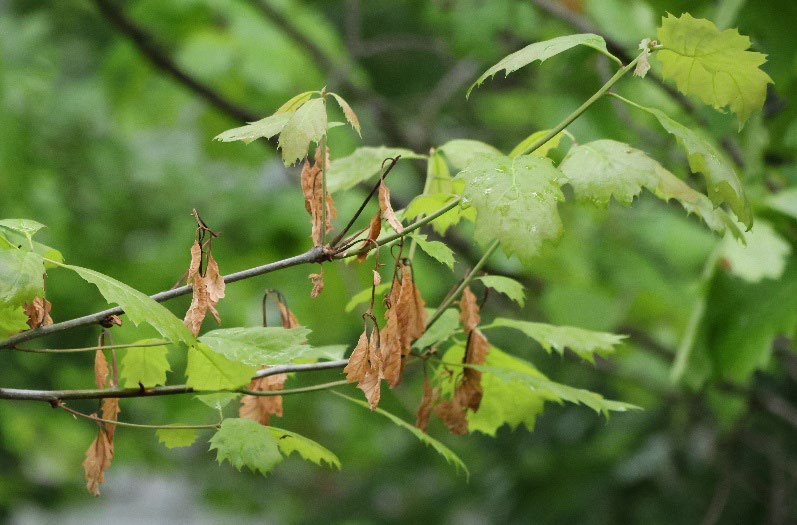 Northern Red Oak
(Quercus rubra) one
month after the freeze.
Northern Red Oak
(Quercus rubra) one
month after the freeze.